
Why India’s Train Stations Have Yellow, Blue, and Red Signboards – The Meaning Behind the Colors
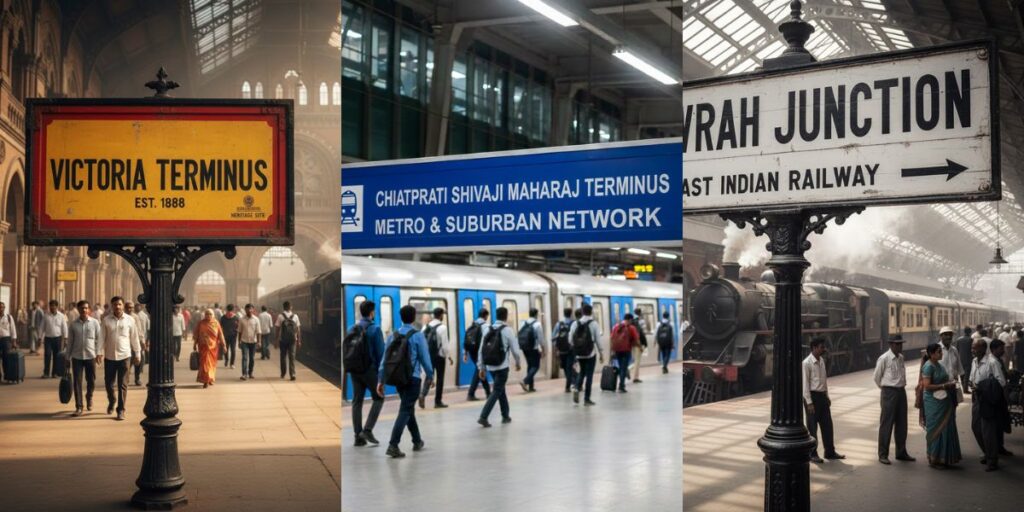
If you’ve ever traveled across India by train, you’ve probably noticed something interesting and that is, not all railway station signboards look the same. Some stations have bright yellow name boards, others use blue or white, and a few heritage stations display striking red-and-yellow signage.
Most passengers never think twice about it, but these colors are not random. Indian Railways uses a structured, tried-and-tested color system based on visibility, geography, history, and evolving standards.
Here’s the simple, surprising story behind these colors.
Also Read: What Those Stones Under Train Tracks Really Do
Best Travel Bags for Vande Bharat Trips
1. India’s Train stations Yellow Boards: India’s Standard and Most Visible

Yellow is the most widely used signboard color across Indian Railways and for good reason.
- High Visibility in All Weather
Scientific studies on visibility show that yellow is the most easily spotted color under fog, dust, rain, and low light, especially when paired with black lettering.
- Yellow reflects more light
- It stands out in rural and dusty environments
- Yellow can be seen clearly from long distances
- This color performs well in both daytime and night-time conditions
This makes yellow perfect for India’s diverse climates—from the deserts of Rajasthan to the plains of Bihar.
- Standardized Across Most Stations
Indian Railways uses yellow boards as the default signage color for:
- Junctions
- Major stations
- Medium-traffic stations
- Rural and suburban stations
This consistency helps passengers instantly recognize station names from a distance.
Also Read: India’s Bullet Train Project: Speeding Toward a New Era
2. India’s Train stations White Boards: Mostly for Smaller or Older Stations

White boards with black letters are far less common today but still exist across older or low-traffic stations.
Why White?
- Cheaper to produce
- Traditionally used before yellow became the standard
- Maintained in places where major upgrades haven’t occurred yet
Where You’ll Find Them
- Small halts
- Legacy stations
- Lesser-used routes
Indian Railways is gradually replacing white boards with high-visibility yellow as part of modernization.
3. India’s Train stations Blue Boards: For Metro Cities and Modern Zones

If you travel through Delhi, Mumbai, Chennai, or Kolkata, you’ll notice a lot of blue station boards.
Why Blue?
- Blue represents urban, modern signage
- Used for suburban, metropolitan, or high-density rail networks
- Visually aligns with metro rail systems
- Looks cleaner and more structured in congested urban environments
Where You’ll See Blue Boards
- Delhi suburban railway
- Mumbai local stations
- Bengaluru and Chennai large urban stations
- Upgraded or newly rebuilt railway terminals
Blue is slowly becoming a standard color for modern stations in major cities.
4. India’s Train stations Red Boards: Heritage and Iconic Stations

Red signboards immediately catch your eye — and that’s intentional.
Why Red?
- Red-yellow combination has been historically used for iconic railway stations
- Considered heritage-friendly
- Matches old brick, stone, or colonial-era architecture
- Preserves the traditional railway look
Famous Stations With Red Signboards
- Jaipur
- Howrah
- Shimla
- Cuttack
- Some stations on old mountain rail lines
Red boards are maintained to protect heritage identity and cultural significance.
5. Modern Upgrades: Reflective Paint & Accessibility
Indian Railways is now standardizing signboards with modern safety features.
New Standards Include:
- Retro-reflective paint – glows when train headlights hit it
- Bigger font size – easier to read from fast trains
- Bilingual or trilingual text – English + Hindi + regional language
- Bold and sans-serif style fonts – more accessible for visually impaired passengers
This ensures station boards are readable even when trains are running at 130–160 kmph.
6. So Why the Variety? A Simple Summary
Here’s the quick breakdown:
| Color | Meaning / Usage |
| Yellow | Standard, high visibility, all-weather use |
| White | Older/small stations, legacy signage |
| Blue | Metro cities, modernized suburban rail |
| Red | Heritage or iconic stations |
Each color has a specific purpose based on visibility, location, heritage, and modernization plans.
7. India Uncovered’s View: Why This Matters (and Why It’s Fascinating)
This color-code system reveals three interesting truths about India:
- Science-based design
Visibility studies directly influence the color choices.
- Respect for heritage
Historic stations keep their traditional identity.
- Modernization in progress
Metro and upgraded stations adopt blue-themed, reflective signage.
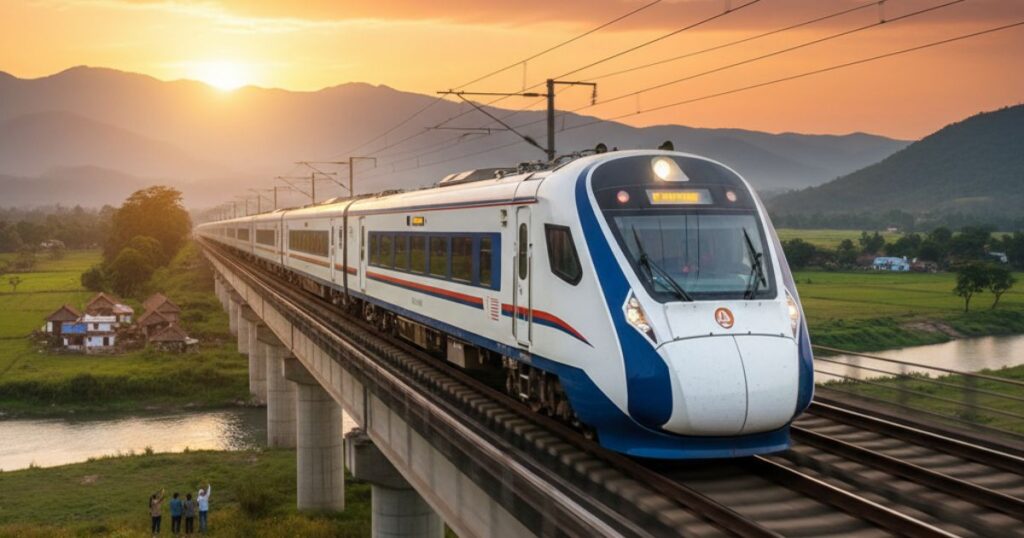
These colors tell a quiet but powerful story about India’s evolution from steam-era railways to modern semi-high-speed corridors.




Pingback: India’s Lost Rivers: The Hidden Channels Flowing Under Our Cities - indiauncovered.in