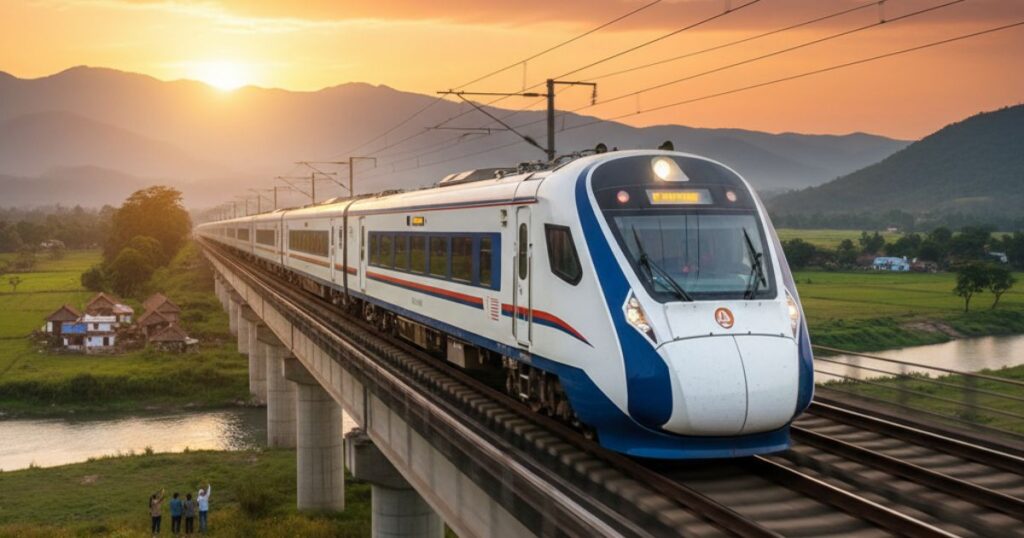
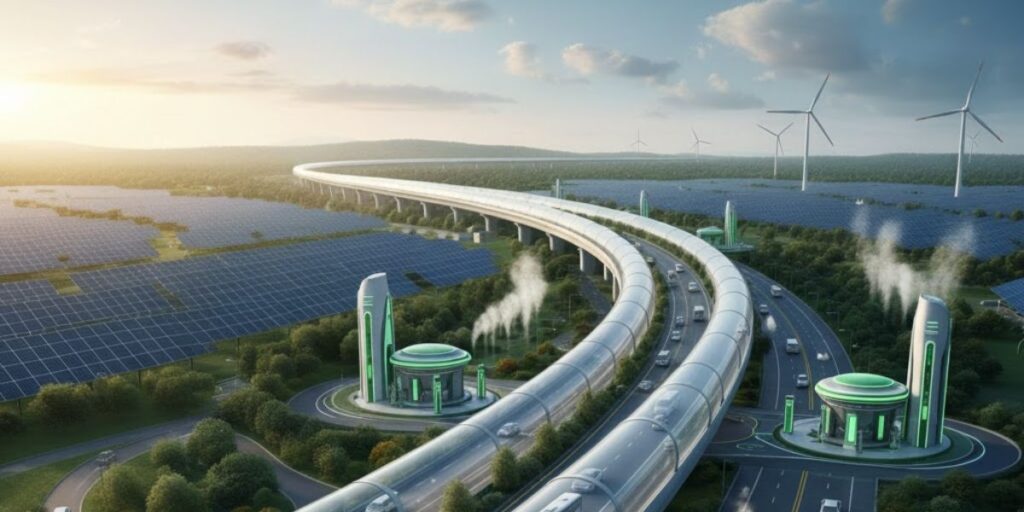
India is entering a new chapter in clean mobility and this time, it’s not electric cars or CNG. It’s something bigger, cleaner, and more powerful: hydrogen highways.
Backed by official government programs, public-sector giants and global energy partners, India is preparing dedicated hydrogen fuel corridors where trucks, buses, and long-distance commercial vehicles can operate with zero emissions.
These ‘Hydrogen Highways’ have begun pilot implementation and will expand significantly through 2025.
1. What Are Hydrogen Highways?
Hydrogen highways are long-distance road corridors where:
- Hydrogen refuelling stations are installed at fixed intervals
- Hydrogen-powered trucks and buses can travel continuously
- Green hydrogen production hubs supply fuel
- Charging time is only 10–15 minutes, similar to diesel refuelling
- Vehicles produce zero tailpipe emissions (only water vapor)
India’s highways are ideal for hydrogen because they connect industrial zones, ports, and logistics hubs.
2. Why India Is Building Hydrogen Highways
India is the world’s third-largest emitter of CO₂ and transport is a major contributor.
The government wants to cut emissions without slowing economic growth. Hydrogen fits perfectly because it is:
- Zero-emission
Only water vapor is released.
- High energy density
Hydrogen carries 3x more energy per kilogram than diesel.
- Ideal for heavy commercial transport
EV trucks need large, heavy batteries. Hydrogen trucks stay lightweight and travel longer.
- Compatible with India’s Green Hydrogen Mission
India plans to produce 5 million tonnes of green hydrogen annually by 2030.
Hydrogen highways are the infrastructure backbone for this vision.
3. The First Hydrogen Highway Corridors
Government agencies and PSUs like NHAI, NTPC, IOCL, HPCL, and MNRE have already confirmed corridor plans.
Delhi – Jaipur Corridor
- Among India’s first hydrogen fuel truck pilot routes
- Being developed with NTPC’s hydrogen production facility
- Suitable for commercial freight
Delhi – Chandigarh Corridor
- Supported by HPCL
- Short-distance testing for buses and trucks
- Ideal for early adoption
Mumbai – Pune Corridor
- Highly industrial route
- Planned refueling station by IOCL
- Part of Maharashtra’s Hydrogen Policy
Kochi – Bengaluru Industrial Belt
- Kerala’s Kochi plant produces green hydrogen using renewable power
- Corridor development expected through 2025–26
These corridors are part of India’s officially announced National Hydrogen Mission.
4. Hydrogen Refuelling Stations: How They Work
These stations are similar to CNG pumps — but far cleaner.
Hydrogen Highway Stations Include:
- High-pressure storage tanks
- Hydrogen dispensers
- On-site electrolyzers (in some stations)
- Safety monitoring systems
- Sensors for leak detection
- 24/7 automated refueling operations
Fueling Time
A hydrogen truck can refuel in 10–15 minutes, making it more practical than charging-based EV trucks.

5. India’s First Hydrogen Trucks and Buses
Several hydrogen vehicles are already operating or being tested in India:
- Ashok Leyland Hydrogen Trucks
Developed with Reliance Industries.
- Tata Motors Hydrogen Buses
Used in pilot projects with NTPC.
- Toyota Mirai (Hydrogen Fuel Cell Car)
Part of India’s official demonstration program with the Ministry of Power.
These pilots prove that India is preparing for large-scale hydrogen transport by 2025.
6. Government Support Behind Hydrogen Highways
India’s Hydrogen Highways are backed by:
- National Green Hydrogen Mission — ₹19,744 crore investment
Focus on production + mobility + refueling corridors.
- Heavy Industries Ministry Incentives
Helps companies build hydrogen trucks and buses.
- Energy PSUs (IOCL, NTPC, HPCL)
Developing hydrogen hubs and stations across key highways.
- State Hydrogen Policies
Maharashtra, Gujarat, Karnataka, Kerala, and Tamil Nadu are rolling out infrastructure support.
This ensures the project is official, verified, and long-term.
7. How Hydrogen Highways Will Change India
- Cleaner Logistics Sector
Zero-emission trucking on long routes.
- Cheaper, renewable fuel
As green hydrogen production scales up, costs drop sharply.
- Industrial + Export Growth
India could become a global hydrogen hub by 2030.
- Technology Leadership
Hydrogen corridors put India on the map with Japan, Korea, and EU hydrogen networks.
- Better air quality
Hydrogen vehicles produce no particulate matter — only water.
8. Challenges India Must Still Solve
- High production cost of green hydrogen
- Need for dozens more hydrogen refueling stations
- Developing storage & safety infrastructure
- Scaling up hydrogen truck manufacturing
But with government backing and PSU involvement, these challenges are already being addressed.
India Uncovered’s View:
India’s Hydrogen Highways represent one of the most exciting transitions in the country’s transport history.
With the first corridors rolling out in 2025, India is on track to build a cleaner, modern, and globally competitive logistics network powered by green hydrogen.
What began as a pilot program is about to become one of India’s major infrastructure transformations.