
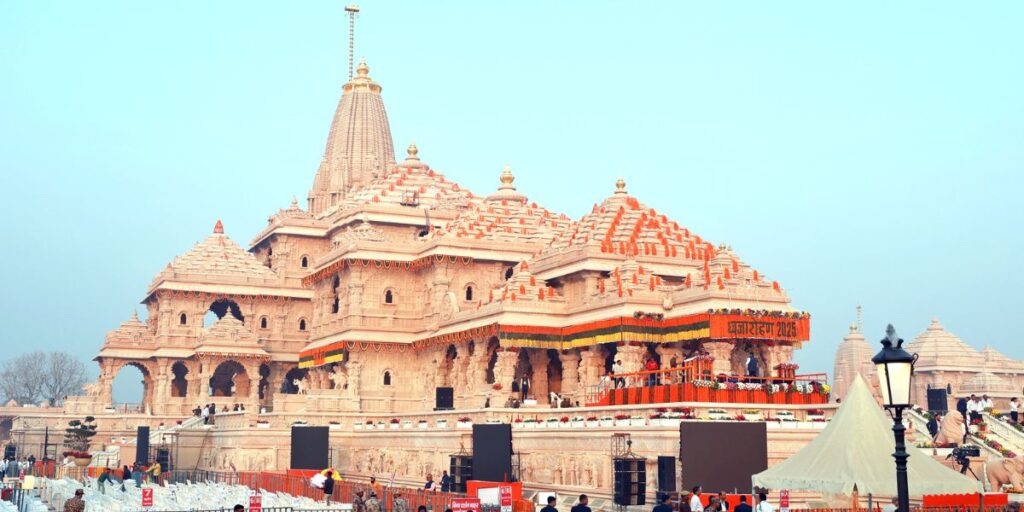
India has always been a land of sacred journeys, spiritual seekers, and divine destinations. But something remarkable is happening today in cities like Ayodhya, Kashi, and Ujjain are no longer just pilgrimage spots, they are transforming into global spiritual tourism hubs.
With heritage restoration, temple corridor projects, rising international footfall, and modern facilities, these ancient cities are not just reviving their divine legacy – they are redefining India’s cultural and tourism image for the world.
Let’s discover why these three cities are now known as India’s Golden Triangle of Spiritual Tourism.
1. Ayodhya – The Global Spiritual Tourism Capital in Making
Ram Janmabhoomi • Deepotsav • Ancient City Revival
Ayodhya, once known only through scriptures, is now becoming a world destination.
Why Ayodhya is rising fast:
- Ram Mandir: Now the world’s most awaited spiritual landmark, attracting global devotees
- Deepotsav Event: A Guinness World Record—19 lakh diyas lit in 2023
- Ayodhya Tourism Data: Expected 5 crore tourists annually after Ram Mandir opening
- International Connection: Thailand, Nepal, Cambodia, Indonesia – all rebranding Ramayana heritage connected to Ayodhya
Ayodhya is no longer just a pilgrimage; it’s becoming a global cultural and spiritual experience.
Also Read: India’s Lost Rivers: The Hidden Channels Flowing Under Our Cities
2. Kashi (Varanasi) – Where Ancient Wisdom Meets Modern India
Heritage + Learning + Spiritual Tourism + Culture Hub
Kashi, the oldest living city in the world, is now a blend of tradition and transformation.
What makes Kashi globally attractive today:
- Kashi Vishwanath Corridor: 5 lakh sq. ft. heritage complex connecting temple to Ganga
- Ganga Aarti: Now broadcasted globally, attracting spiritual travelers from 70+ countries
- Spiritual Walks & Heritage Trails: Panchkroshi Yatra, Temples Circuit, Ganga Walkways
- Harvard & Oxford Studies: Documenting Kashi’s cultural resilience & traditions
Kashi is now positioning itself as “The Spiritual Soul of India.”
Also Read: How Goa Evolved from Party Capital to India’s Digital Nomad Paradise
3. Ujjain – The City of Kaal Bhairav & Cosmic Time
Mahakal Lok • Kumbh • Ancient Astronomy City
Ujjain is where time, tantra, and temple traditions meet. Once a spiritual and astronomical capital, it is now emerging again.
What transformed Ujjain into a spiritual destination:
- Mahakal Lok Corridor: One of India’s biggest spiritual corridors (900m walkway, sculptures, artwork, lighting)
- Kumbh Mela Preparation: Expected 10 crore pilgrims in 2028
- Cosmic Heritage: Ancient observatories, planetary temples, time calculation sites
- Increasing international interest in Tantric traditions, Jyotish Shastra, and cosmic science
Ujjain is now known as “The City of Eternal Time and Cosmic Faith.”
Why Spiritual Tourism Is Booming in India
| Reason | How It Impacts Travel |
|---|---|
| Heritage Revival | Temple corridors, restoration, cleanliness projects |
| Global Awareness | Ramayana-linked cultures connecting with India |
| Digital Promotion | Live Aartis, drone visuals, 360° temple experiences |
| Wellness & Faith Travel | Yoga, Ayurveda, Meditation retreats near sacred cities |
| Better Connectivity | Airports, hotels, heritage homestays, luxury trains |
FAQ
Q1: Why is spiritual tourism increasing in India today?
Because of heritage restoration, global awareness, improved facilities, and India’s strong cultural identity revival.
Q2: Is this only about devotion?
No. It’s also cultural, historical, architectural, and even wellness-based tourism.
Q3: Which cities will be next?
Dwarka, Somnath, Kanchipuram, Puri, Nashik, Chidambaram and Mathura are emerging strongly.
India Uncovered’s View:
Ayodhya represents faith.
Kashi represents knowledge.
Ujjain represents cosmic time.
Together, these cities tell the timeless story of Bharat—the land of spirituality, culture, wisdom, and eternal heritage.



Pingback: Kedarnath Ropeway: Devotion Meets Technology in the Lap of the Himalayas - indiauncovered.in