
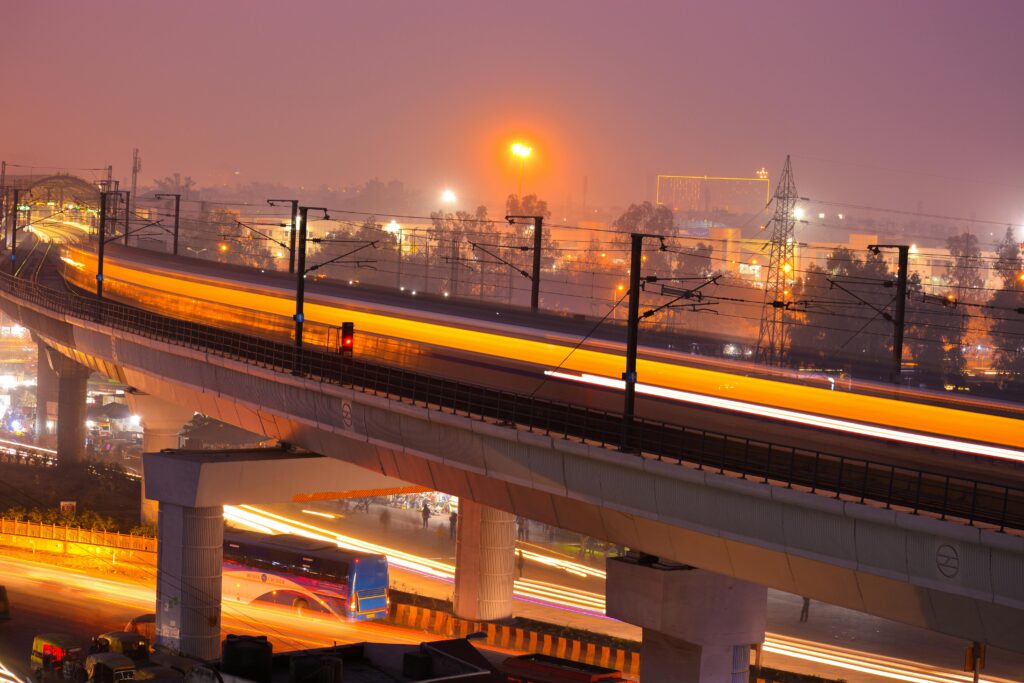
Delhi is not just a city — it’s a living museum of time.
It has been destroyed seven times and rebuilt seven times — each time rising stronger, grander, and more breathtaking than before.
Today’s Delhi is not merely the political capital of India; it’s a palimpsest of history — where every brick, monument, and street corner tells the story of civilizations that came, ruled, and left their mark.
Let’s take a journey through the many faces of Delhi — from the mythical Indraprastha to modern New Delhi.
Also Read: Why Delhi Is Called the City That Never Dies
1. The First Delhi: Indraprastha of the Pandavas
If you believe Delhi’s story began with the Mughals, think again.
Delhi’s origins trace back to the Mahabharata — when the Pandavas established their grand capital, Indraprastha, on the banks of the Yamuna.
Archaeological evidence around Purana Qila (Old Fort) supports this — remnants of ancient pottery and tools belonging to that era have been unearthed here.
Even the iron pillar near Qutub Minar, dating back to Emperor Ashoka’s Mauryan period (3rd century BCE), stands rust-free till today — a testament to India’s ancient metallurgical genius.
From Surajkund near Faridabad to the ruins of Mehrauli, Delhi hides layers of civilization that go back thousands of years.
2. The Tomars and the Chauhans: The Birth of Early Delhi
The first known rulers to establish Delhi as a fortified settlement were the Tomar Rajputs, led by King Anangpal Tomar, who founded Lal Kot in the 11th century.
Later, Prithviraj Chauhan expanded it and renamed it Qila Rai Pithora — marking Delhi’s first brush with recorded Indian history.
The stones of Lal Kot still whisper stories of swords, conquests, and courage — a Delhi long before any Sultan or Mughal set foot here.
Also Read: Vande Bharat: Connecting India’s Soul and Growth
3. The Delhi Sultanate: Power, Stone, and Glory
Before the Mughals, Delhi was ruled by the mighty Delhi Sultanate, a succession of Islamic dynasties that shaped much of northern India’s architecture and culture.
- This was when Delhi’s skyline began to rise — quite literally. Qutb-ud-din Aibak began constructing the iconic Qutub Minar, later completed by Iltutmish.
- Alauddin Khilji built the Alai Darwaza and started the ambitious but unfinished Alai Minar.
- Ghiyasuddin Tughlaq built Tughlaqabad Fort, while Feroz Shah Tughlaq left behind the Feroz Shah Kotla and the restoration of Hauz Khas.
This was the Delhi of stone and strength — where power was carved into every monument.

4. The Mughals: When Delhi Became Poetry in Marble
Then came the Mughals — and Delhi transformed from a fortress of power to a canvas of art.
Under Humayun, Delhi saw its first Persian-style garden tomb — the Humayun’s Tomb (1570) — which later inspired the Taj Mahal.
But it was Shah Jahan who gave Delhi its most celebrated identity — Shahjahanabad.
He built the Red Fort (1648), the Jama Masjid (1656), and the grand Chandni Chowk market. These structures weren’t just royal buildings; they were statements — of culture, luxury, and Mughal mastery. The Safdarjung Tomb (1754) marked the sunset of Mughal architecture — the final bloom of a fading empire.
Best Travel Bags for Vande Bharat Trips
5. The British Era: The Making of New Delhi
When the British shifted their capital from Calcutta to Delhi in 1911, they envisioned a city that mirrored imperial power.
Thus began the making of New Delhi — the eighth city of Delhi’s long story.
Designed by Sir Edwin Lutyens and Herbert Baker, this “new capital” was an architectural marvel — with wide boulevards, symmetrical gardens, and grand administrative buildings.
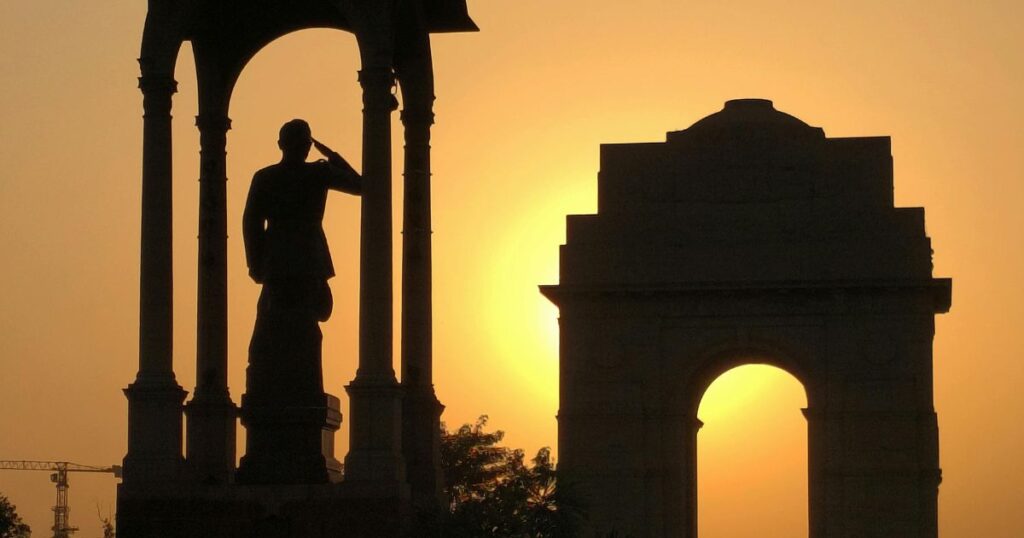
The Viceroy’s House (now Rashtrapati Bhavan), Parliament House, India Gate (1931), and Connaught Place became symbols of colonial order and grandeur.
What the Mughals built in red sandstone, the British rebuilt in beige — but both left Delhi timeless.
6. The Republic of India: Delhi Reborn Once Again
After independence in 1947, Delhi entered a new chapter — not of conquest, but of creation.
The first landmark of free India was Raj Ghat (1948), built in memory of Mahatma Gandhi.
Later came Amar Jawan Jyoti (1972) at India Gate, the spiritual Lotus Temple (1986), and the majestic Akshardham Temple (2005).
Delhi continued to evolve — with the National War Memorial (2019), Prime Ministers’ Museum (2022), and the New Parliament Building, symbolizing a nation that honors its past while shaping its future.
Even its skyline changed — from Vikas Minar (1976) to iconic institutions like AIIMS (1956) and IIT Delhi (1961) — proof that modern India was here to stay.
Also Read: What Those Stones Under Train Tracks Really Do
7. Delhi vs New Delhi — What’s the Difference?
We often use “Delhi” and “New Delhi” interchangeably, but they are not the same.
Delhi is a Union Territory — officially called the National Capital Territory (NCT) of Delhi, spanning over 1,480 square kilometers and comprising several districts.
New Delhi, on the other hand, is only a part of it — the district designed by the British in the early 20th century.
Home to Rashtrapati Bhavan, Parliament House, the Supreme Court, India Gate, and Connaught Place, New Delhi was formally inaugurated on 13 February 1931.
So yes, all of New Delhi is Delhi — but not all of Delhi is New Delhi.
Jaipur or Udaipur? The Ultimate Royal Dilemma
8. The City That Never Stops Evolving
From the Pandavas to the Parliament, Delhi has been reborn more times than any other city in the world. Every ruler left a layer, every dynasty left a signature, and every citizen continues to add to its living story.
Delhi doesn’t just exist — it breathes history, heritage, and hope. It’s the only city where the ruins of an empire and the offices of a republic share the same skyline.
So the next time you walk through Delhi, remember — you’re not walking through a city.
You’re walking through centuries.

Pingback: Kangra: Himachal’s Sacred Land of Faith and Temples - indiauncovered.in
Pingback: Delhi: The City That Rose Seven Times
Pingback: Why Daulat Ki Chaat Exists Only in Delhi’s Winters - indiauncovered.in