
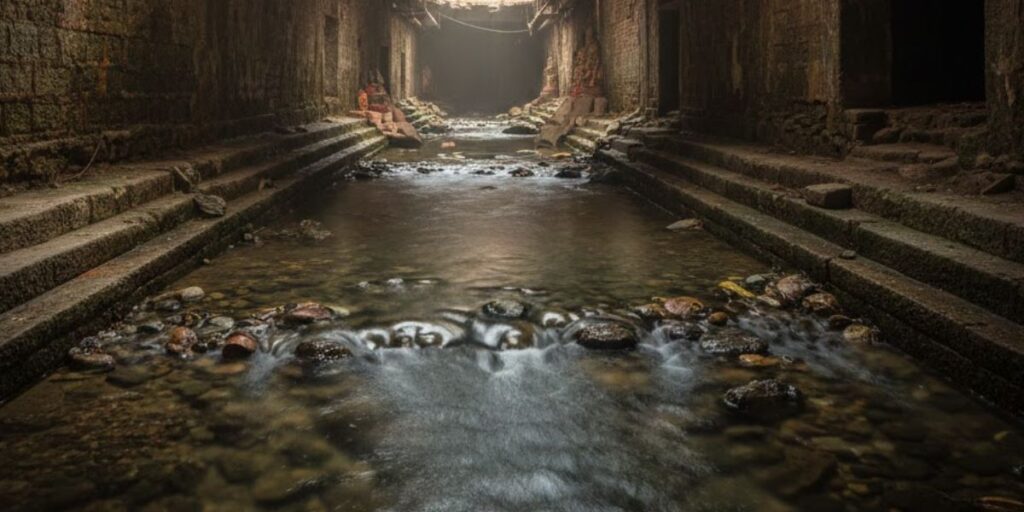
India’s Lost Rivers We Forgot but Still Flow Beneath Us
When we imagine India’s ancient cities, we think of temples, markets, and forts. But every great settlement began with one essential element: water. Historians often say, “Civilizations rise near rivers and fall when rivers disappear.”
But did India’s rivers really disappear?
Surprisingly — many did not.
They simply went underground, covered by centuries of construction, population growth, and expanding urban landscapes.
Today, beneath cities like Delhi, Mumbai, Chennai, Varanasi, Pune, Jaipur, and Hyderabad, hidden rivers continue to flow quietly. These forgotten waterways still influence flooding, groundwater levels, and even the layout of our streets.
This is the story of India’s lost rivers — and what they reveal about our ancient urban engineering.
Also Read: India’s Lost Engineering Wonders: Ancient Mega-Structures That Shock Modern Science
1. Why Do Rivers “Disappear” Beneath Cities?
Rivers go underground for several reasons:
1. Urban Expansion
As cities grow, roads and neighbourhoods expand over natural water channels.
2. Canalisation & Covering
Many rivers were enclosed in concrete channels to prevent flooding, turning them into underground drains.
3. Natural Geological Movement
Some rivers naturally sink below ground due to porous soil, rock formations, or seasonal water patterns.
4. Pollution & Neglect
When small rivers become polluted, they are often diverted, covered, or mixed with sewage systems.

highlighting India’s hidden natural waterways. / Image: Canva
2. Major Indian Cities with Hidden or Forgotten Rivers
A. Delhi – The City of Nine Lost Rivers
Beyond the Yamuna, Delhi once had active rivers such as:
- Sahibi (Nagli Nala)
- Dhawla Kuan Stream
- Tughlaqabad Stream
- Barapullah River
- Karbala Drain (Old river course)
A major study by IIT and ASI shows that Delhi’s lost rivers still influence monsoon flooding because the old channels remain active underground.
B. Mumbai – A City Built on Seven Rivers
Mumbai’s forgotten rivers include:
- Mithi River (now canalised)
- Dahisar River
- Poisar River
- Oshiwara River
- Ulhas Tributaries
Most of these now flow through concrete tunnels or culverts. Urban planners say restoring these channels could reduce city flooding.
C. Chennai – The Land of Vanished Streams
Chennai’s historical waterways like the Cochrane Canal, Long Tank Lake pathway, and hidden distributaries of the Adyar & Cooum now flow underground or are encroached by development.
D. Jaipur – The Invisible Water Network
Jaipur’s ancient builders created a sophisticated network of:
- Seasonal streams
- Underground catchment channels
- Natural slope-based water flow routes
This hidden system helped feed Amber Lake and surrounding stepwells.
3. Why These Hidden Rivers Still Matter
1. Urban Flooding
When construction blocks old river paths, monsoon water tries to follow its natural route — causing flooding.
2. Groundwater Recharge
Underground rivers still replenish aquifers, especially in semi-arid cities.
3. Heritage & Urban Planning
Mapping lost rivers helps city planners understand natural slopes, drainage, and soil behaviour.
4. Climate Resilience
Cities with restored river channels manage rainfall better.
Also Read: Why India’s Train Stations Use Yellow, Blue, and Red Signboards
4. How Experts Trace These Buried Rivers
Researchers use:
- Remote sensing satellite maps
- LIDAR terrain imaging
- Old British-era maps
- Historical manuscripts
- Groundwater flow patterns
- Soil and sediment analysis
This combination reveals ancient river paths hidden below roads and buildings.
FAQs
Q1. What are India’s lost rivers?
These are historical rivers that once flowed on the surface but now exist underground because cities expanded over them.
Q2. Do underground rivers still flow in India?
Yes. Many channels in cities like Delhi and Mumbai still carry water — naturally or through canalised structures.
Q3. Why do hidden rivers cause flooding?
Because construction blocks natural water pathways, forcing water to overflow during the monsoon.
Q4. Can lost rivers be restored?
Some can be daylighted (opened back to the surface), while others can be preserved as natural drainage corridors.
Q5. Which Indian city has the most lost rivers?
Delhi and Mumbai have multiple hidden rivers shaped by centuries of urban growth.


Pingback: Why Ayodhya, Kashi & Ujjain Are Becoming Global Spiritual Tourism Hubs - indiauncovered.in
Pingback: Valley of Flowers Is Not Just a Trek – It’s India’s Hidden Valley of Gods - indiauncovered.in