
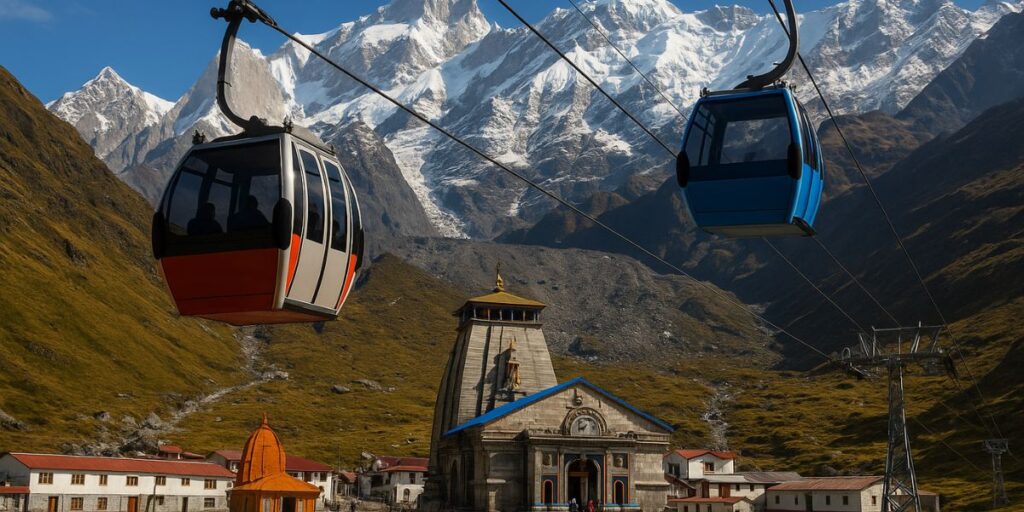
In the lap of the Garhwal Himalayas stands Kedarnath — one of India’s holiest shrines devoted to Lord Shiva. Until now, devotees had to trek 18 kilometers through steep, rocky terrain and unpredictable weather to reach the temple. But India is rewriting this journey. By 2027, Kedarnath will be connected to the world via a revolutionary ropeway ‘Kedarnath Ropeway’ – one that will become the highest long-span ropeway in the world.
Also Read: Why Ayodhya, Kashi & Ujjain Are Becoming Global Spiritual Tourism Hubs
It will reduce the difficult 18 km journey to a 9-minute aerial experience, making the shrine more accessible for senior citizens, children, differently-abled travelers, and global pilgrims. This isn’t just an engineering project. It is a story of how India is blending faith, technology, tourism, national pride, and accessibility.
2.1 What Makes the Kedarnath Ropeway So Special?
| Feature | Detail |
|---|---|
| Total Ropeway Length | 13 km (longest in India for pilgrimage) |
| Height | World’s highest ropeway at over 3,700 meters |
| Travel Time | 18 km trek → 9-minute ropeway ride |
| Proposed Completion | 2027 |
| Passenger Capacity | 2,500 passengers per hour |
| Investment | 1,260 Rs. crore (public-private partnership) |
The ropeway will start from Sonprayag and end directly at the Kedarnath temple base, providing both scenic and spiritual experience.
2.2 Why This Ropeway Will Transform Spiritual Tourism
1. Accessibility for All
Until now, the trek was extremely challenging — especially for senior citizens, children, and differently-abled devotees. The ropeway will open Kedarnath to millions who could never make the pilgrimage before.
2. Boost to Uttarakhand’s Local Economy
The ropeway is expected to generate more than 25,000 local jobs, promote homestays, trekking guides, local handicrafts, and spiritual tourism packages.
3. Shift from Helicopter to Eco-Friendly Travel
Helicopter travel has been costly, weather-sensitive, and noisy. The ropeway is more sustainable, silent, safer, and cost-effective for pilgrims.
2.3 Why Global Tourists Are Now Interested
This ropeway is putting Kedarnath on the international spiritual travel map, alongside Machu Picchu (Peru), Vatican City, and Mount Kailash.
- Adventure + Spiritual tourism hybrid
- Wellness tourism and meditation retreats emerging nearby
- Valley of Flowers, Hemkund Sahib, Badrinath, Tungnath circuit integration
2.4 The New “Sacred Himalayan Circuit”
Tourism authorities are designing a connected ropeway + roadway spiritual circuit:
Haridwar → Rishikesh → Kedarnath → Tungnath → Badrinath → Hemkund Sahib → Valley of Flowers
Perfect for global spiritual travelers, meditation seekers, history lovers, and digital storytellers.
2.5 Ropeway or Helicopter? A Quick Travel Comparison
| Feature | Ropeway | Helicopter |
|---|---|---|
| Ticket Price | 1,500–2,000 Rs. (estimated) | 7,000–14,000 Rs. |
| Weather Safe | High | Low |
| Eco-Friendly | Yes | No |
| Views | Panoramic 360° | Limited |
| Mass Travel | Yes (2500 ppl/hr) | No |
2.6 From Trek to Meditation Skyway
With the ropeway, the journey becomes more peaceful, soulful, and reflective. Instead of fatigue, devotees will reach the temple energized and spiritually calm.
This is not just about reaching the temple faster. It is about traveling with clarity, devotion, and mindfulness.
3. FAQs (Targeted Keywords Used)
Q1. What is the Kedarnath Ropeway Project?
It is India’s upcoming highest ropeway connecting Sonprayag to Kedarnath temple, reducing the 18 km trek to a 9-minute ride.
Q2. When will Kedarnath Ropeway be completed?
The project is expected to be completed by 2026–27, according to Uttarakhand Tourism and Ministry of Transport.
Q3. What will be the Kedarnath ropeway ticket price?
The estimated fare is between 1,500–2,500 Rupees, much cheaper than helicopters.
Q4. Will the ropeway affect the local environment?
It is designed with eco-protection norms, using silent, low-emission systems to preserve the Himalayan ecosystem.
Q5. Can senior citizens and differently-abled travelers use the ropeway?
Yes! The ropeway is being created specifically to make Kedarnath more accessible for all pilgrims.
Pingback: How India Is Restoring Ancient Temples Using Modern Technology - indiauncovered.in